
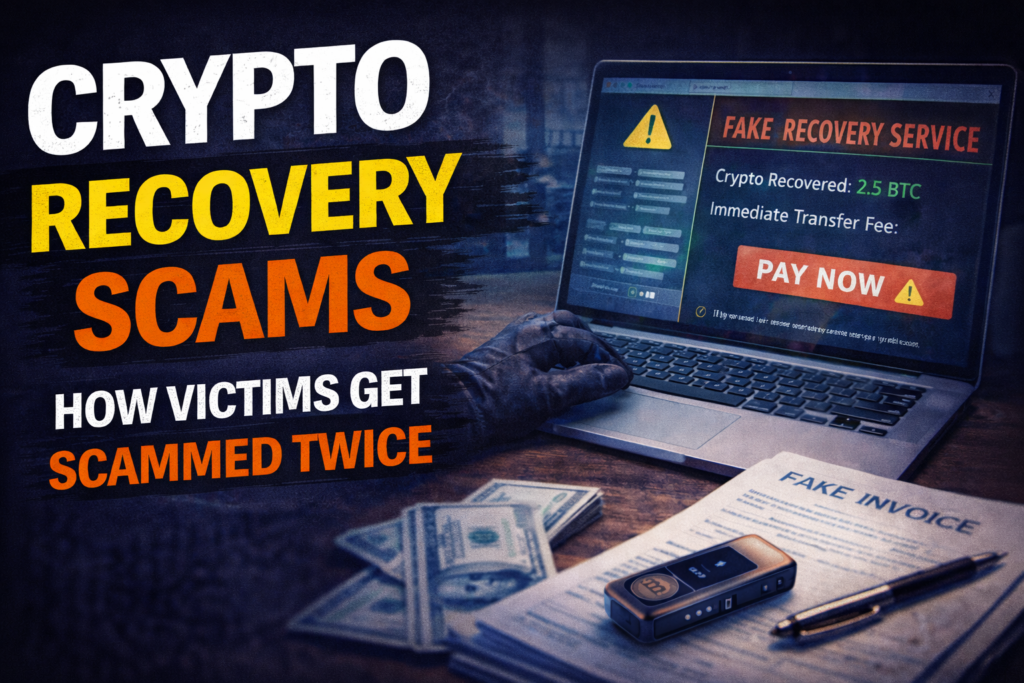
Losing cryptocurrency is stressful. Many victims hope to recover their funds quickly. Unfortunately, some fall into a second trap: recovery scams. These schemes target victims by promising help but end up taking more money or information.
This guide explains how these scams work, how to recognize red flags, and what to do to avoid losing more.
Why Victims Are Targeted Again
Scammers know that victims are often desperate. After a wallet is drained or stolen:
- The victim is anxious and wants help immediately.
- They may not know which services are legitimate.
- Emotional vulnerability can lead to hasty decisions.
Recovery scams exploit these conditions by offering “guaranteed results” or “instant fund return,” which are almost always false.
Common Types of Crypto Recovery Scams
Understanding the typical scam patterns helps you spot them early.
1. Guaranteed Recovery Promises
These schemes claim:
- Full recovery of stolen crypto
- “Special tools” to reverse blockchain transactions
- 100% success within hours
2. Upfront Fee Scams
Scammers ask for:
- Crypto payment in advance
- “Transaction fees”
- “Legal or technical service fees”
They may even request multiple payments over time.
3. Phishing / Data Theft
Some “recovery agents” ask you to:
- Share seed phrases
- Share private keys
- Install remote access software
- Connect your wallet to a suspicious website
4. Impersonation Scams
Scammers pretend to be:
- Law enforcement
- Blockchain tracing experts
- Well-known crypto recovery firms
They send emails, messages, or call you. They may even create fake websites with credible branding.
How Scammers Convince Victims
Scammers use psychological tactics:
- Urgency: “If you don’t act now, your funds are gone forever.”
- Authority: Claiming government, law enforcement, or tech expertise.
- Social proof: Showing fake testimonials or fake “success stories.”
- Technical jargon: Overloading you with blockchain terms to appear credible.
Recognizing these tactics is key to staying safe.
Red Flags to Watch For
If you see any of these signs, proceed with extreme caution:
- Promises of guaranteed recovery
- Requests for upfront cryptocurrency payments
- Pressure to act immediately
- Requests for private keys or full seed phrases
- No verifiable company identity or track record
- Overly complex explanations with no clear process
Legitimate services explain what is realistically possible, the steps involved, and the risks. They never make promises they cannot control.
How to Protect Yourself from Second Scams
Step 1 — Pause and Assess
Take a moment before responding to any recovery offer. Avoid hasty decisions.
Step 2 — Verify the Service
- Check official websites
- Look for verifiable reviews from trusted sources
- Confirm registration or company credentials
- Contact them through official channels
Step 3 — Keep Sensitive Information Private
- Never share your full seed phrase
- Never share private keys
- Do not give access to your devices
Step 4 — Document Everything
Keep records of the scam:
- Emails and messages
- Transaction IDs
- Screenshots of requests
- Any payment or crypto addresses
Documentation helps authorities if you choose to report.
How Wayvantis Approaches Recovery Safely
Wayvantis focuses on evidence-first tracing without ever promising guaranteed outcomes. The process emphasizes:
- Step-by-step blockchain tracing
- Transaction path analysis
- Exchange exposure checks
- Transparent reporting of limits
- Guidance without pressure or upfront crypto fees
Confidence comes from process and clarity, not promises.
What Victims Should Do After Being Scammed Twice
- Stop interacting with the scammer immediately
- Secure any remaining crypto assets in a new wallet
- Run device security checks for malware or phishing
- File official reports with exchanges and cybercrime authorities
- Seek professional, transparent guidance from evidence-first services
The Most Important Truth
Being scammed a second time is common — but preventable. The best defense is:
- Awareness of typical recovery scams
- Careful verification of services
- Understanding what blockchain recovery realistically allows
No one can promise magic. Trust transparency, not hype.
Need a Realistic Assessment?
If you want a safe, realistic assessment of your crypto theft, Wayvantis can review the transaction path, map potential intervention points, and explain limits — without guarantees or pressure.
Leave a Reply