
Strategic Reporting for Maximum Effectiveness
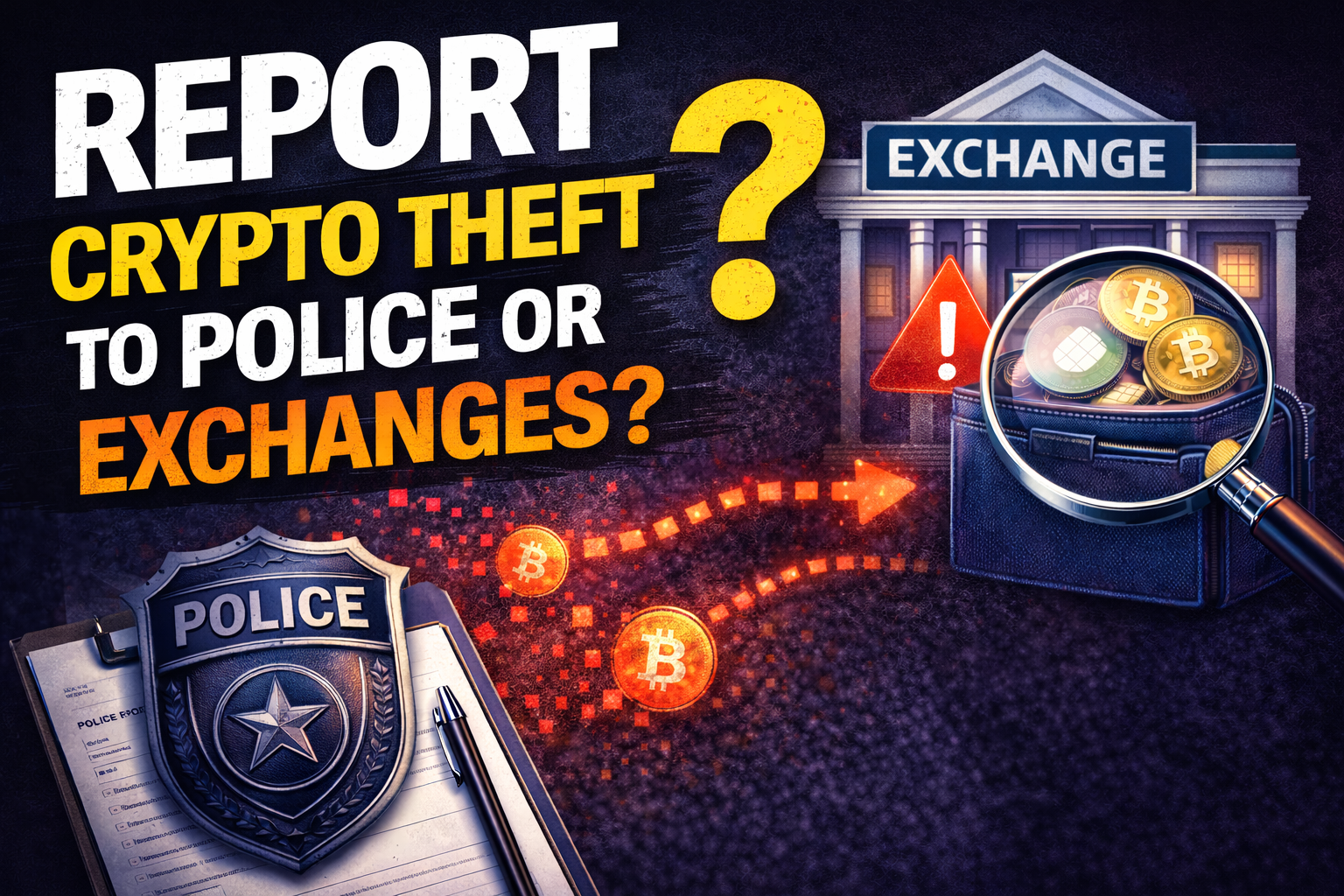
Losing cryptocurrency to theft creates immediate confusion and urgency. Victims often face a critical decision: report to law enforcement, contact exchanges, or pursue both paths simultaneously. The optimal approach requires understanding what each channel can realistically achieve.
In most cases, both reporting avenues should be pursued—but in a specific sequence with appropriate expectations. This guide provides clear guidance on strategic reporting to maximize potential outcomes while avoiding common mistakes.
First — Do Not Remain Silent
Many victims delay reporting due to embarrassment or skepticism about potential outcomes. However, delay directly reduces potential intervention opportunities, particularly with exchanges where timing is critical.
Even when immediate recovery appears unlikely, reporting establishes essential documentation that becomes valuable for:
- Exchange compliance team reviews
- Law enforcement investigation coordination
- Insurance claim processing (where applicable)
- Future forensic analysis and tracking
- Legal escalation in cross-border cases
Therefore, prompt action—even with uncertainty—creates significantly better positioning than delayed or omitted reporting.
Reporting Priority Assessment
Response priorities depend on specific circumstances and evidence availability. Use this matrix to determine immediate action focus.
High Priority: Exchange Contact
When funds have reached exchange deposit addresses within the last 24-48 hours. Immediate exchange reporting can trigger temporary freezes and compliance reviews before funds are withdrawn.
Medium Priority: Police Report
For thefts exceeding jurisdictional thresholds or involving identity theft. Official documentation supports exchange requests and creates investigation records, though direct recovery action is limited.
Medium Priority: Evidence Collection
Before any formal reporting. Comprehensive evidence gathering significantly increases credibility and response likelihood from both exchanges and law enforcement agencies.
Lower Priority: Social Media
Public reporting without evidence. While community awareness has value, public disclosure without structured evidence rarely yields practical recovery assistance and may alert perpetrators.
Exchange vs. Police Reporting: Capabilities and Limits
Understanding the distinct roles and capabilities of exchanges versus law enforcement is essential for effective reporting strategy.
Exchange Reporting
Primary Purpose: Asset containment within platform systems
Best For: Time-sensitive interventions when funds reach exchange addresses
Response Time: Hours to days (depending on compliance processes)
Evidence Required: Transaction hashes, addresses, timing documentation
Typical Outcomes: Account freezes, compliance reviews, information requests
Police Reporting
Primary Purpose: Official documentation and investigation initiation
Best For: Larger thefts, identity theft cases, cross-jurisdiction coordination
Response Time: Days to weeks (depending on jurisdiction and caseload)
Evidence Required: Comprehensive documentation, often with notarized statements
Typical Outcomes: Case numbers, official records, potential investigation
Optimal Reporting Sequence
Following this structured sequence maximizes effectiveness while minimizing delays and coordination issues.
Secure Remaining Assets
Immediately transfer any unaffected funds to a new, secure wallet. Change passwords and revoke unnecessary smart contract approvals. This prevents potential secondary attacks or additional losses during the reporting process.
Comprehensive Evidence Collection
Gather all transaction hashes, wallet addresses, timestamps, screenshots, and communications. Document the complete theft timeline with specific details about platforms, interfaces, and suspicious activities preceding the incident.
Exchange Notification (If Applicable)
If blockchain analysis indicates funds reached exchange addresses, submit structured reports through official compliance channels. Include all evidence and emphasize time sensitivity. Follow up systematically but professionally.
Law Enforcement Report Filing
File official reports with appropriate law enforcement agencies, typically local police for smaller cases or cybercrime units for larger thefts. Provide complete documentation and request official case numbers for reference.
Professional Tracing Assessment
Consider professional blockchain tracing to confirm fund paths, identify exchange exposure, and assess realistic recovery potential. This analysis informs whether continued reporting efforts are warranted.
Essential Evidence Preparation
Before contacting any authority or exchange, compile this comprehensive documentation package:
Transaction Documentation
Complete transaction hashes (TXIDs), sending/receiving addresses, block confirmations, and blockchain explorer links for all relevant transfers.
Timeline Reconstruction
Detailed chronology including exact times (with timezone), sequence of events, and any suspicious activities preceding the theft.
Visual Documentation
Screenshots of wallet balances before and after, transaction interfaces, and any suspicious messages or phishing attempts.
Platform and Device Information
Details about wallets used, platforms accessed, devices involved, and any recent software installations or updates.
Communication Records
Complete records of scam-related communications, phishing attempts, support interactions, and any relevant correspondence.
Realistic Capabilities: What Each Channel Can Achieve
Understanding practical limitations prevents unrealistic expectations and wasted effort.
Exchanges CAN:
- Flag suspicious deposit addresses
- Freeze accounts under investigation
- Request user identity verification
- Provide transaction logs to authorities
- Monitor suspicious account activity
Exchanges CANNOT:
- Reverse confirmed blockchain transfers
- Freeze external private wallets
- Act without substantial evidence
- Share user data without legal process
- Guarantee fund recovery
Vague Reporting Without Evidence
Many victims submit ineffective reports stating only “My wallet was hacked. Please help.” Such communications lack the structured data required for meaningful review by exchanges or law enforcement.
Instead, provide comprehensive, factual documentation including transaction hashes, addresses, timestamps, and specific incident details. Evidence-based reporting significantly increases response probability and credibility.
Beware Fake “Report Handlers”
Following crypto theft, victims often receive unsolicited contacts from individuals claiming to facilitate reporting and recovery for fees. These scams typically involve:
- Upfront payment requests for “processing” or “expediting”
- Guarantees of fund recovery
- Claims of special relationships with exchanges or authorities
- Pressure tactics emphasizing urgency
- Vague or overly technical explanations
Legitimate exchanges and law enforcement agencies do not charge fees for receiving theft reports. Professional assessment services clearly explain limitations and do not guarantee outcomes.
When Professional Analysis Adds Value
Victims uncertain about reporting viability can benefit from professional technical assessment to determine:
- Precise fund movement paths and destination verification
- Exchange exposure confirmation and platform identification
- Remaining intervention time windows
- Realistic recovery potential based on specific circumstances
- Optimal reporting strategy and documentation requirements
This analysis prevents wasted effort on cases with minimal intervention potential while identifying genuine opportunities where timely reporting could yield results.
Reporting establishes documentation and creates potential intervention opportunities—but guarantees no specific outcomes. Realistic expectations protect victims from secondary scams while enabling informed decision-making about resource allocation and next steps.
Continue Reading
Explore more guides on crypto security:
Reporting Strategy Assessment
Unsure about optimal reporting approaches for your specific situation? Our assessment evaluates fund movement, identifies exchange exposure, and provides clear reporting recommendations with realistic outcome expectations.
We help determine whether exchange notification, law enforcement reporting, or professional tracing represents the most appropriate next step based on technical analysis rather than speculation.
Technical analysis • Strategic guidance • Realistic assessment

Leave a Reply